
This entire product site is authored, validated, and rendered with Sights.See how it works

Lead-generation sites

Make the path to action clear—and the data boundary clearer.

Sights can compose the complete persuasive journey around an intake interface. The current product slice keeps submission disabled until a trusted server action, protection model, and storage destination are implemented explicitly.
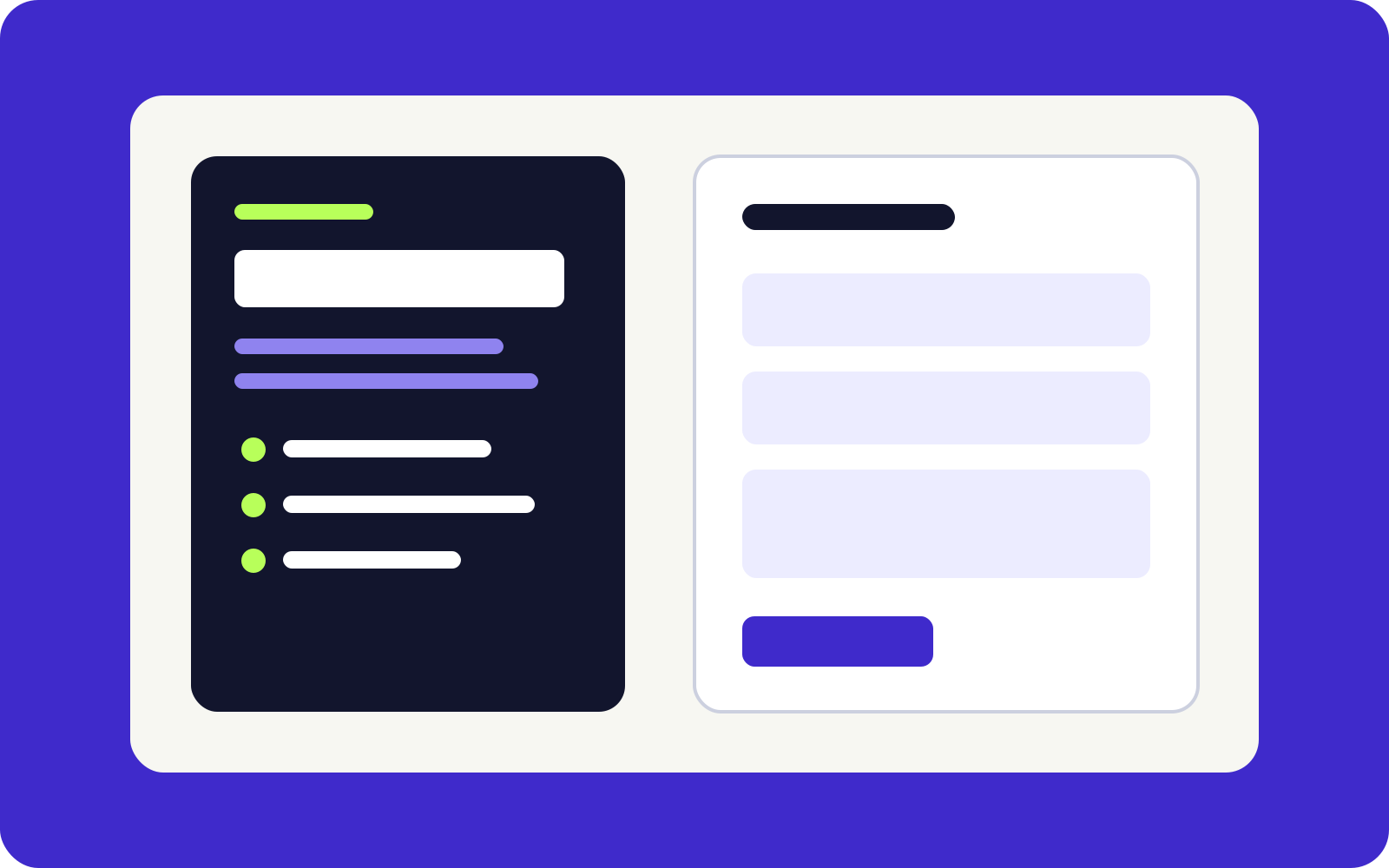
A lead-generation landing page with benefits beside a structured form

Conversion as a content system

A useful lead journey earns the form.

  1. Name the problem

    Open with one audience, one situation, and a concrete outcome instead of a generic promise.

  2. Explain the fit

    Use feature, process, editorial, or comparison sections to make the offer and boundaries understandable.

  3. Supply evidence

    Add approved metrics, work, testimonials, organization relationships, or editorial detail with visible context and disclosure.

  4. Reduce uncertainty

    Answer recurring questions, explain what happens next, and avoid asking for information before the value is clear.

  5. Present the intake

    Use persistent labels, appropriate input modes, clear instructions, and an explicit confidentiality or privacy statement.

  6. Handle data in trusted code

    Validate again on the server, protect the mutation, name secrets, control logging, and keep the destination out of page content.

Implemented versus required

The interface exists. A production submission path does not—yet.

The interface exists. A production submission path does not—yet.
CapabilityCurrent Sights sliceStatic, reviewable interface proofProduction lead actionTrusted server capability required
Accessible labeled fieldsYesYes
Confidentiality warningYesYes
Input schema in trusted codeNoYes
Origin and abuse protectionNoYes
Persistence destinationNoYes
Runtime secret contractNoYes

Non-negotiable boundary

Page JSON should never become a covert backend configuration file.

  • Named action

    Content may eventually reference a registered public action name, not define a handler or destination.

  • Server validation

    The trusted action validates input even when the browser provides client-side constraints.

  • Origin protection

    Mutating requests need same-origin checks, CSRF protection, request-size limits, and safe method handling.

  • Spam controls

    Rate-limit and abuse-mitigation hooks belong to the server capability contract.

  • Secret hygiene

    Environment names may appear in capability reports; values never enter content, catalogs, logs, or browser bundles.

  • Safe logging

    Default operational logs must avoid leaking message bodies, contact details, or other personally identifiable information.

Publishing at scale

Use the same contracts for a deep editorial library.

Content sites add typed records, article templates, safe Markdown, related content, and publication metadata without giving up the static baseline.

Explore content sites