Explain the offer without rebuilding the page system.
Compose product, service, company, proof, and campaign pages from reusable patterns while the theme keeps the brand coherent.
- Page sections
- Reusable
- Brand system
- Consistent


Static-first site infrastructure
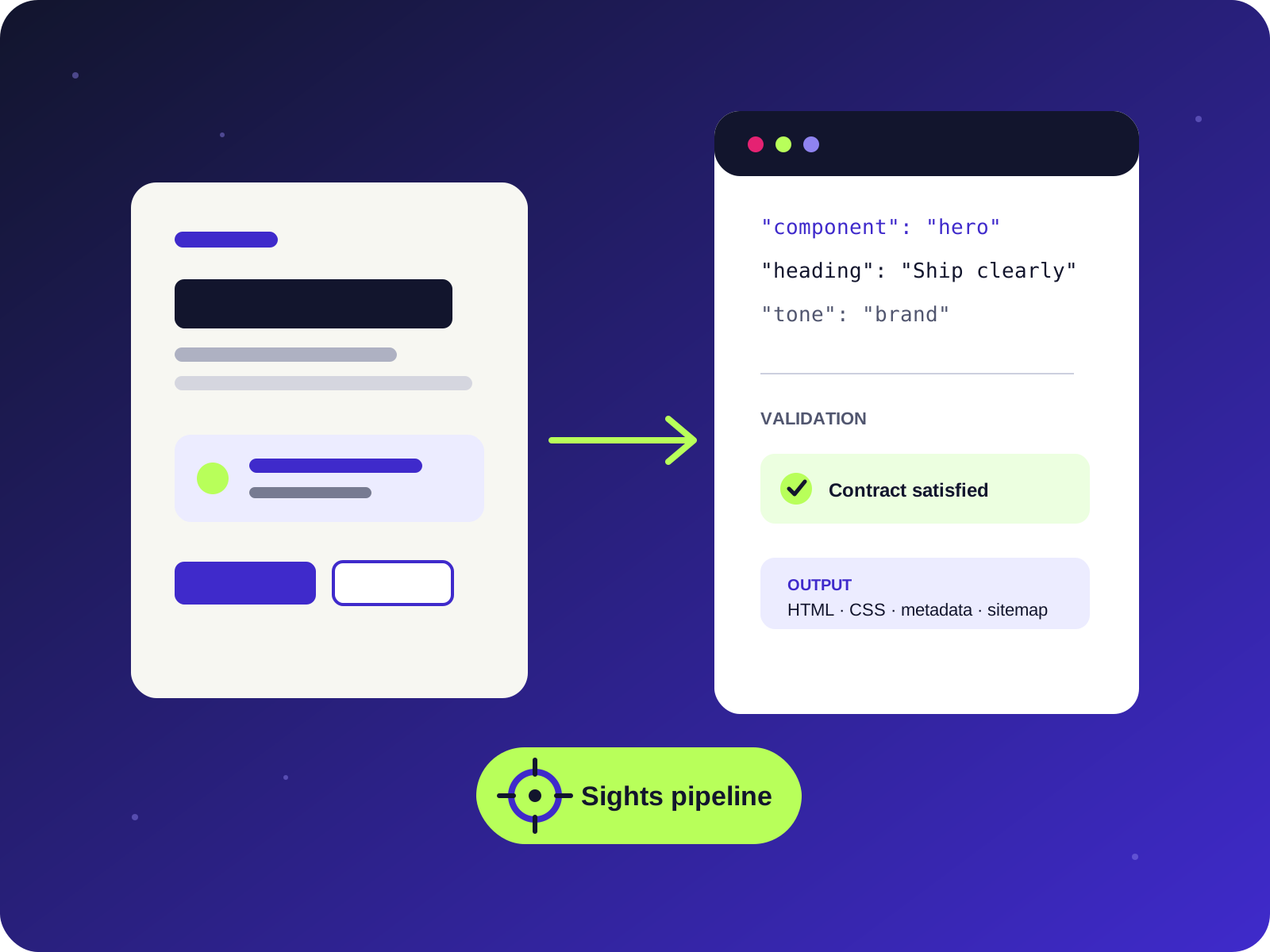
Sights turns structured content into fast, accessible, production-ready websites using strict contracts, reusable components, semantic themes, and a quality gate that travels with every build.
The difference
AI can generate markup quickly. The expensive part is keeping every page coherent, accessible, responsive, secure, and maintainable after the first prompt.
| What has to hold up | SightsShared contracts and tested behavior | Bespoke generationPage-specific markup and decisions |
|---|---|---|
| Content model | Strict, discoverable schemas | Implicit shapes that drift |
| Responsive behavior | Verified once and reused | Reimplemented on every page |
| Design decisions | Semantic theme roles | Local styling and prompt residue |
| Accessibility | Component and browser gates | Depends on each generation |
| Runtime behavior | Declared and audited | Easy to add, hard to account for |
| Next edit | Small content diff | Another round of page surgery |
One connected platform
Sights keeps authoring, presentation, rendering, and verification separate enough to change safely—and connected enough to ship as one dependable site.

JSON and Markdown stay focused on meaning. Unknown fields, bad links, missing assets, and unsafe markup fail early.
Explore content contracts
Intent-based components own markup, responsive behavior, interaction, and accessibility instead of leaking those choices into content.
Explore the component system
One validated theme controls color, type, spacing, shape, and motion across the entire component catalog.
Explore theming
Pages build into portable HTML, CSS, assets, metadata, discovery files, and host-ready redirect artifacts.
Explore delivery
Validation, build auditing, axe, keyboard checks, reflow, and three browser engines test the shared system and the consumer together.
Explore quality
Site-owned components can add unique behavior while keeping the same schema, documentation, review, and runtime rules.
Explore extensibilityCurrent product slice
The canonical consumer exercises the same package boundary, generated documentation, build pipeline, and browser gate expected of a real Sights site.
Built for real website work
Sights is intentionally optimized for sites where content, clarity, search visibility, and dependable delivery matter more than application state.
Compose product, service, company, proof, and campaign pages from reusable patterns while the theme keeps the brand coherent.
Build focused landing pages and accessible intake interfaces. Persistence remains an explicit trusted capability, never a hidden endpoint in content.

Publish index pages, article routes, featured media, metadata, breadcrumbs, related content, and discovery files from validated records.

Register a custom component with a strict schema and isolated runtime. Pages that do not use it do not load its code.

The operating model
The workflow gives human and AI authors a bounded path that stays easy to inspect in version control.
Made for agents and humans
Sights generates a local agent guide, JSON Schemas, component and template catalogs, and examples directly from the same definitions used at runtime.
That makes the correct path discoverable: edit content first, reuse a component, validate the result, and cross the trusted-code boundary only when the site genuinely needs a new capability.
See the complete model
Explore the architecture, follow the authoring workflow, and open the live custom-component example. Every page you visit is another part of the proof.