
The Sights platform
A narrow authoring surface over a serious site system.
Authors work with structured pages, local media, and Markdown. Sights handles the contracts underneath: component selection, design foundations, route resolution, metadata, static generation, review surfaces, and output auditing.
Platform principles
The constraints are the product.
Sights is not a visual canvas or another way to make JSX faster. It is a bounded system for producing dependable content-driven sites repeatedly.
System anatomy
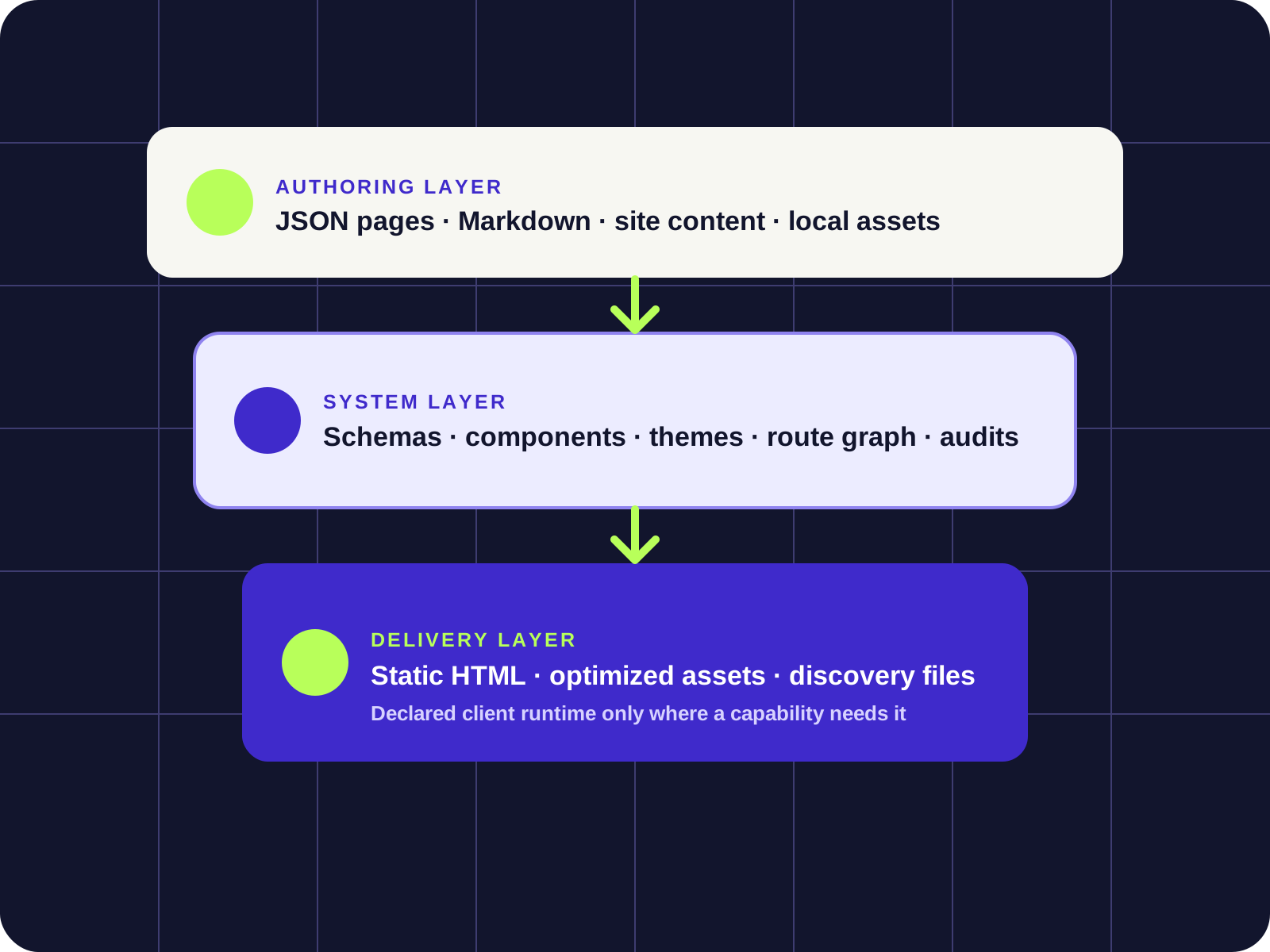
Six layers turn approved source into a complete website.
Each layer owns one class of decision, which makes failures easier to locate and changes easier to review.
Explore the system
Go as deep as the decision requires.
Each capability page separates the user-facing benefit from the technical contract that makes it dependable.
Content contracts
Structured page authoring, collections, Markdown, links, assets, visibility, and generated agent guidance.
Explore content contractsComponent system
Intent-based components, manifests, examples, variants, primitives, and the internal review catalog.
Explore the component systemTheming
Semantic color, typography, spacing, shape, tone, and motion foundations without page-level styling.
Explore Sights themingDelivery
Astro static output, canonical URLs, metadata, JSON-LD, sitemaps, llms discovery, redirects, and capability isolation.
Explore deliveryQuality
Schema validation, output audits, keyboard checks, accessibility scans, responsive coverage, and three browser engines.
Explore quality gatesExtensibility
Site-owned components, trusted implementation code, shared primitives, and runtime declarations that remain bounded.
Explore extensibility
Optimized scope
Sights is for websites, not every kind of software.
The strongest fit is a marketing, lead-generation, editorial, knowledge, or campaign site where clear content, organic discovery, durable delivery, and repeatable quality matter.
A site may add a focused client-side tool through a custom component. The current product slice deliberately does not pretend to be a CMS, database, authenticated application framework, or general-purpose visual page builder.
- Excellent fitContent-driven sites with recurring page patterns, strong brand requirements, and a need for fast dependable delivery.
- Explicit extensionSmall interactive tools whose code, schema, runtime, fallback, and accessibility contract can remain isolated.
- Choose another foundationStateful products centered on accounts, real-time collaboration, or deeply dynamic authenticated workflows.
The practical path
See the system operate from brief to browser gate.
The workflow page follows a real Sights change through authoring, validation, rendering, review, and production output.