
Content contracts
Content stays meaningful because implementation stays out.
A Sights page names the route, metadata, sections, and content each section needs. It cannot carry raw HTML, CSS classes, styles, scripts, secrets, or executable expressions.
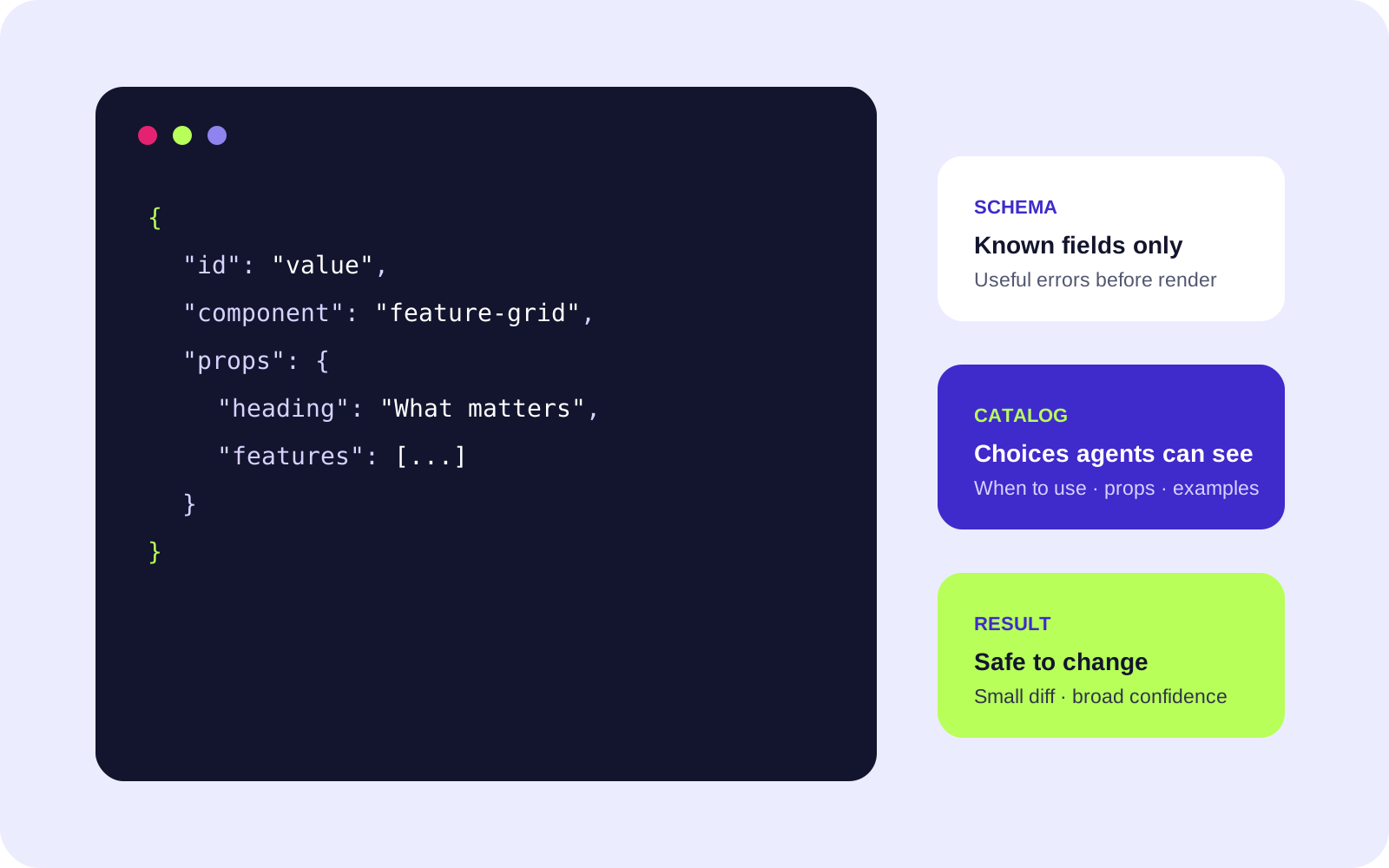
Small surface, complete model
Pages describe intent, not rendering instructions.
Composed pages contain an ordered list of named sections. Templated pages select one validated record and resolve it into the same section model before rendering.
Long-form prose lives in local Markdown sidecars. Reusable records—such as posts and people—live in typed collections. The route graph checks the relationships between all of them.
- Stable identityPages, sections, records, and routes use explicit ids so diffs and references remain legible.
- Strict fieldsUnknown component names, props, page fields, and collection shapes fail validation instead of disappearing at render time.
- Safe proseMarkdown supports useful CommonMark while rejecting raw HTML, unsafe protocols, and remote image dependencies.
Before rendering
Validation follows the whole site graph.
A syntactically valid file is not enough. Sights checks whether every referenced part of the site actually exists and can be published safely.
Agent-readable by construction
The system publishes its own local operating manual.
Generated artifacts make the valid editing surface discoverable without relying on a stale prompt or undocumented conventions.
Content questions
What authors can—and cannot—put in a page.
Why JSON instead of asking an agent to write Astro or React?
JSON makes the valid choices finite, schema-checkable, and easy to review. The component already owns markup and responsive behavior, so most page changes do not need application code.
Where does long-form copy live?
Articles, policies, and other substantial prose live in local Markdown sidecars. Sights sanitizes them at build time and rejects raw HTML and unsafe link protocols.
Can page content choose a color or CSS class?
No. Pages may select documented semantic variants such as a section tone. Literal presentation belongs in the validated theme or trusted component implementation.
Can links point anywhere?
External URLs must use an allowed protocol. Internal routes and published fragments are resolved against the full site graph, including public-versus-internal visibility.
Can an agent still add a new capability?
Yes, through trusted code: define a strict component schema, renderer, manifest, examples, and any isolated runtime. Declarative content never becomes the code boundary.
Next capability
See what those content contracts are allowed to compose.
The component system turns a small declarative page surface into a broad set of tested, responsive site patterns.