
Semantic theming
One theme changes the whole site. Content keeps its meaning.
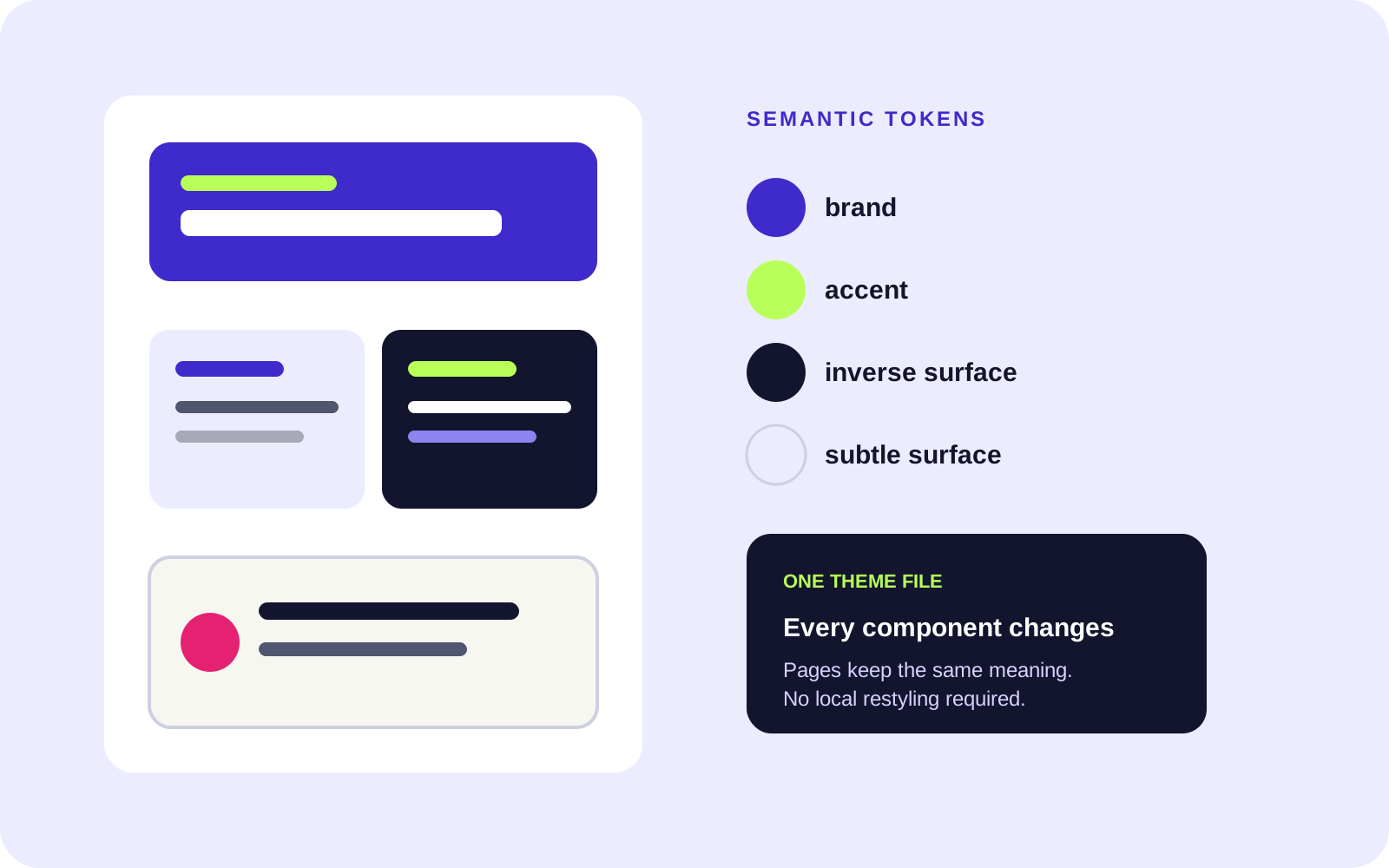
Sights themes define roles such as brand, text, subtle surface, focus, display type, content width, section rhythm, and motion. Components consume those roles without knowing a site's literal values.
Validated foundations
The theme covers the decisions that should be shared.
A finite token contract keeps site identity expressive while preventing arbitrary selectors or page-authored visual values from becoming another escape hatch.
Expressive section tones
Authors choose communicative weight, not a color name.
A section may ask for default, subtle, inverse, or brand treatment when its manifest supports tone. The active theme supplies the complete contextual palette for text, borders, emphasis, and actions.
That keeps a page portable between identities. A Sights consumer can move from a restrained editorial theme to an energetic product theme without editing the structured content.
- DefaultContinue the primary reading surface with the ordinary text hierarchy.
- SubtleGroup supporting explanation on a quiet alternate surface.
- InverseCreate a strong high-contrast band for proof, architecture, or operational detail.
- BrandReserve the product identity surface for decisive openings and calls to action.
Clean separation
Meaning belongs in the page. Presentation belongs in the theme.
| Decision | Page contentWhat the reader needs | Theme contractHow the site expresses it |
|---|---|---|
| Section emphasis | Semantic tone | Surface and foreground colors |
| Information hierarchy | Heading and body content | Type roles and rhythm |
| Action importance | Primary or secondary action | Button treatment and states |
| Media meaning | Local source and alt text | Crop, fit, radius, and layout |
| Motion intent | Reveal, stagger, or parallax | Duration, distance, easing, reduction |
Theme questions
How far can a Sights theme go?
Can two Sights sites look substantially different?
Yes. Color roles, local fonts, typography scales, spacing, widths, radii, focus treatment, and motion create a strong identity. Components remain structurally consistent while the expression changes.
Can a theme contain arbitrary CSS?
No. Theme data follows a finite schema of semantic roles. Trusted site-owned component CSS may use the compiled tokens, but theme JSON is not a selector or utility-class escape hatch.
How are contrast pairs handled?
The theme declares paired foreground and surface roles where contrast can be determined. Validation rejects known invalid combinations before the site renders.
Why require complete typography and spacing scales?
Partial overrides create ambiguous foundations. A consumer may inherit the reference scales or replace an entire scale so every component resolves against one coherent system.
From expression to output
See how the themed site becomes portable production files.
Delivery keeps the static baseline durable while making every script, redirect, metadata file, and discovery artifact explicit.