
Static-first delivery
A website should still be a document unless it needs to be software.
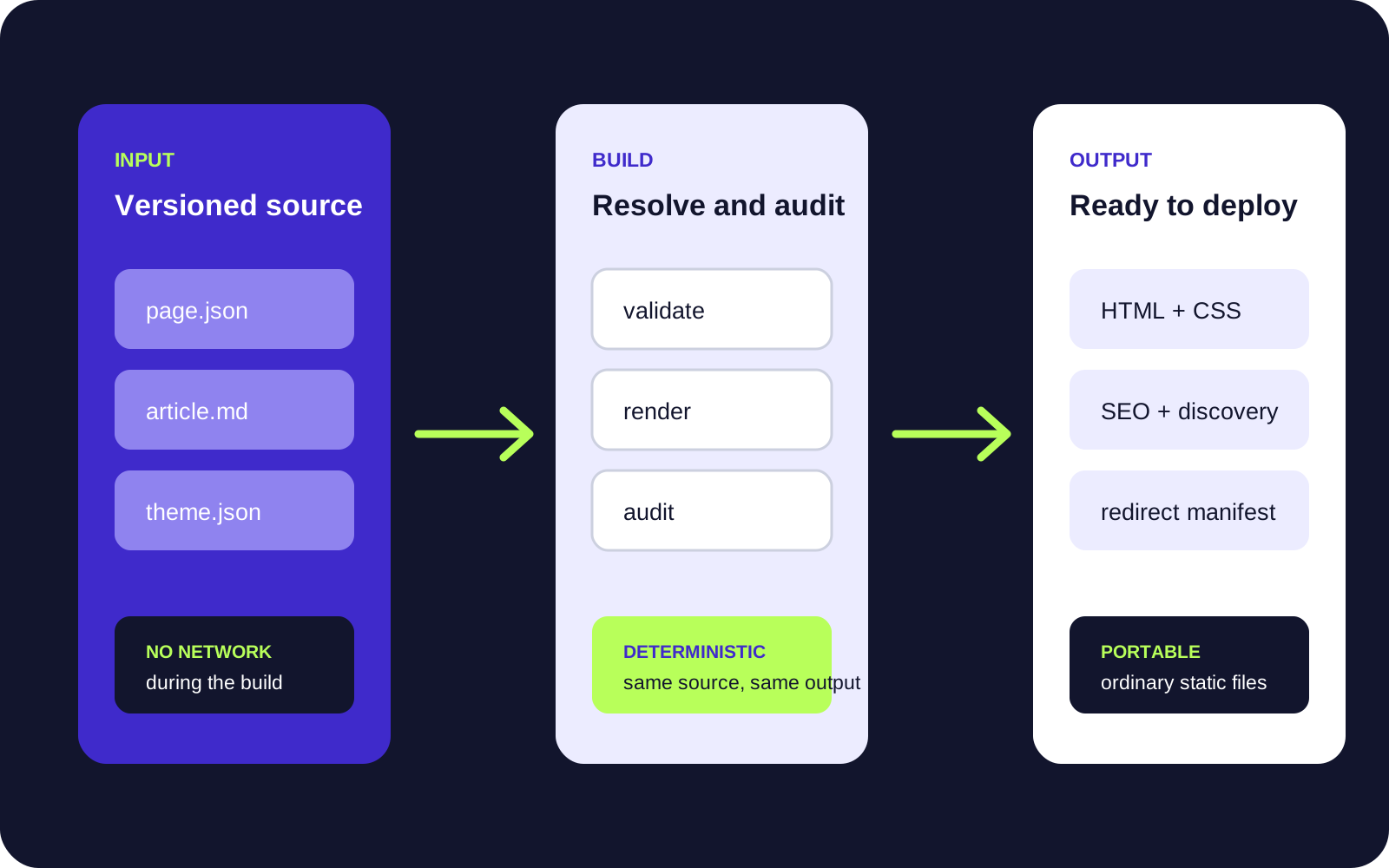
Sights prerenders ordinary content routes into portable files. Client behavior is opt-in, page-scoped, and declared by the component or shell capability that needs it.
Complete static output
The build includes the unglamorous parts that make a site real.
Every artifact comes from the same validated route and content model instead of being maintained as an unrelated afterthought.
Capability isolation
Static pages and interactive tools keep different runtime contracts.
The custom calculator in this product site proves that one interactive component does not need to turn every route into a client application.
| Capability | Ordinary content pagePrerendered document | Custom calculator pageDeclared interactive island |
|---|---|---|
| Prerendered HTML | Yes | Yes |
| Useful before client code | Yes | Yes |
| Component runtime loaded | No | Yes |
| Runtime on unrelated pages | No | No |
| Server execution required | No | No |
Build pipeline
One resolved model drives every output.
Current boundary
Static-first does not mean pretending a form submission is static.
The current Sights slice includes an accessible, explicitly disabled consultation-form interface and a real isolated client-component proof. It does not yet ship a trusted server action or lead-storage layer.
When a production form arrives, its handler, input schema, secret requirements, origin protection, storage destination, and host capability must live in registered trusted code—not in page JSON.
- Already realStatic routes, declared motion, dropdown navigation, custom client components, local assets, metadata, discovery, redirects, and audits.
- Deliberately absentBundled databases, arbitrary endpoints, page-authored scripts, secret values, and silently enabled server execution.
- Future ruleServer behavior must be named, typed, host-supported, protected, and visible in generated capability output.
Trust the output
A static build is only valuable if it holds up in real browsers.
The quality system checks contracts, output, keyboard behavior, accessibility, responsive layouts, and multiple rendering engines before handoff.